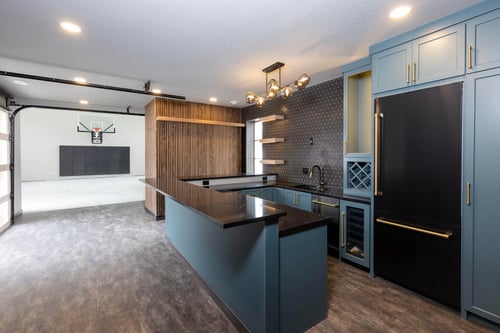

Wellness Trends for Your Home Gym
Wellness is about more than getting a workout in, and home gyms are starting to reflect that.
It’s no doubt bathrooms and kitchens are the main areas of the house that most homeowners would love to change. In the same breath, both projects have a tendency to be the most expensive. Because bathrooms are smaller spaces, it can be easier to implement cost-saving measures.
In today’s post, our interior design team shares their insider tips for getting a beautiful bathing space while keeping cost top of mind. After all, a freestanding tub, solid gold faucets, and heated floors are optional.
Rule No. 1 is to get the floor plan right. Enlarging or rearranging a bathroom often means moving plumbing pipes, which can be expensive. Talk with a professional about your desires for the space so they can accommodate your needs appropriately. You can alter the size or layout of your bathroom during a remodel. But you do need to weigh the benefits of that change against the financial impact of that change.
In the same vein, we recommend you try to use existing plumbing as rearranging the pipes can be pricey and is often unnecessary, so it helps to avoid it if possible. Keeping load-bearing walls in place can save on cost as well. Instead, explore the possibilities of expanding through non-load-bearing walls, which can be removed or moved with moderate cost and effort.
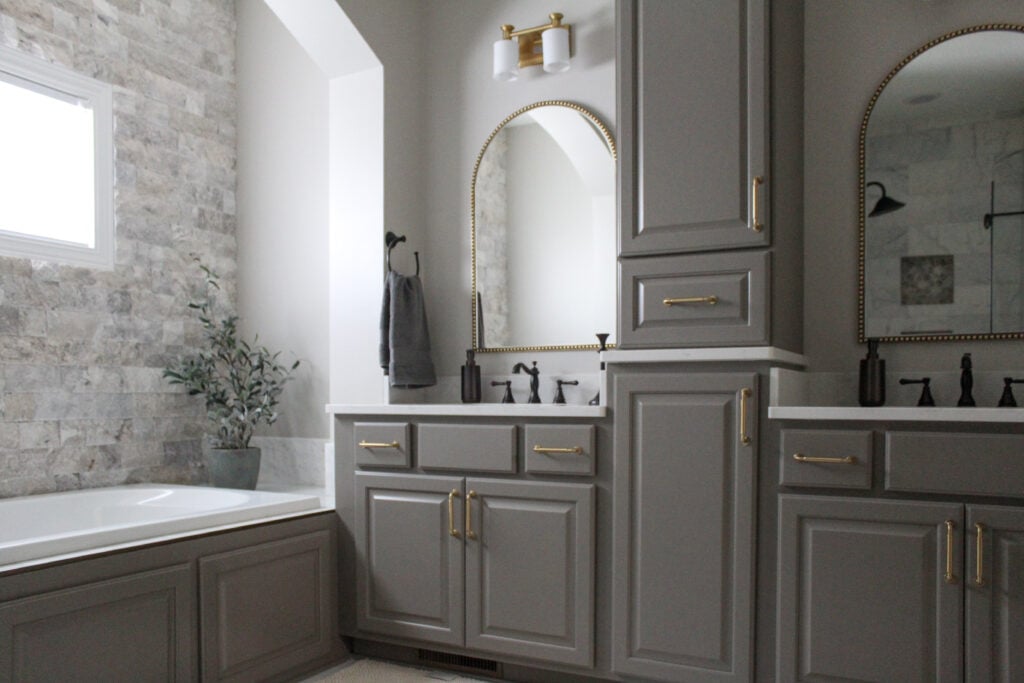
If you’re on a budget, it can be tempting to go it alone to cut costs. Bringing in a bathroom professional early on can be less problematic all around, which should mean a substantial financial saving in the entire realm of the project. Our design build team will not only work to save you money, but help you maximize space, storage and match your aesthetic vision.
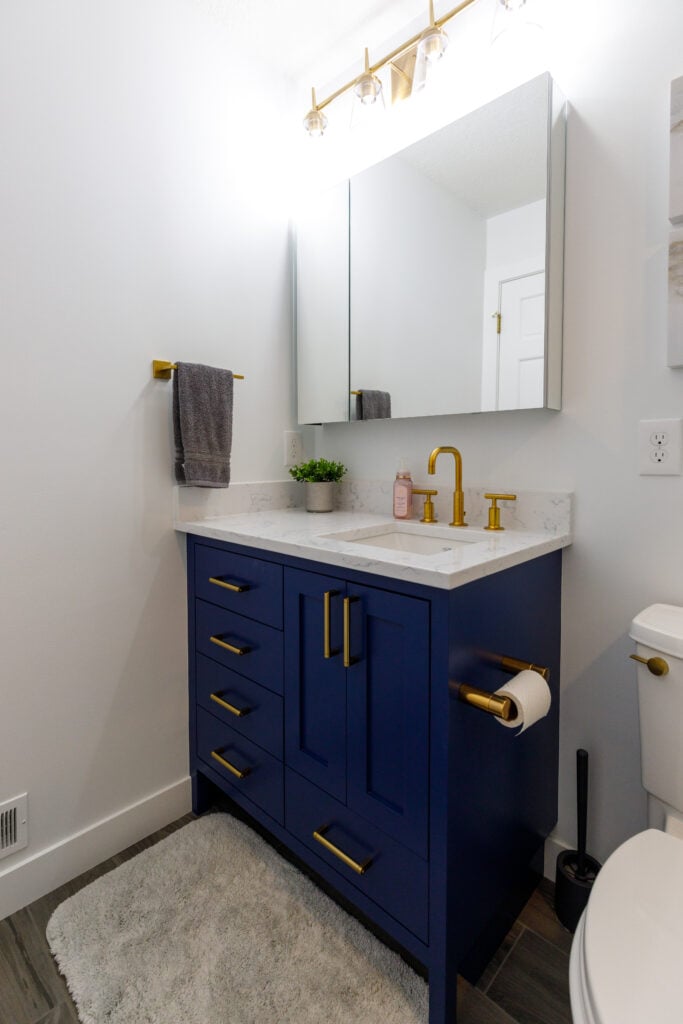
Yes, you heard that right! You don’t have to choose the most expensive materials, especially these days. Choose a porcelain tile instead of natural stone, or a free-standing bathroom vanity vs. custom. On-trend materials are also typically very high in price, meaning the renovation will cost more than it might be worth when those prices drop back down and the trend changes. Instead, stick with classic designs and materials to avoid inflated prices and frequent remodels.
Forgoing the bathtub isn’t for everyone, but if you tend not to prefer showers anyway, it could be an effortless money-saving option. It also can cut costs long-term due to greater energy efficiency (no bathtub).
Are there any other ways you have saved money on a bathroom project? Share in the comments!