Investing in your physical wellness used to mean leaving home to go to a gym, spa, or clubhouse.
Now, homeowners are rethinking how their homes support their daily lives. Privacy matters more. Convenience matters more. And time is too valuable to spend driving across town for a workout or a moment of recovery.
A dedicated at-home wellness space is an investment we’re seeing more and more clients make. When places for fitness and restoration are built into the home, health becomes part of the rhythm of everyday life. It also becomes a long-term investment – not just in property value, but investment in energy, clarity, and health.
As this shift takes hold, one question consistently rises to the surface: if you’re creating space for wellness at home, what should it look like?
For some homeowners, the answer is a high-performance gym designed for daily use.
For others, it’s a private spa focused on recovery and stress relief.
And increasingly, the most compelling spaces combine both.
The decision starts less with square footage and more with how you want to feel inside your home.
The Case for a Dedicated Home Gym
A home gym is about momentum. No more commute, no waiting for equipment, but with access to your favorite equipment. This daily access makes it easier to stick to a routine.
Luxury home gyms today are less about squeezing machines into a spare room and more about intentional design. A well-designed gym is also highly functional:
- Durable flooring built for impact
- Proper ventilation and air flow
- Sound control to keep the rest of the home quiet
- Integrated storage
- Mirrors and lighting to support workouts
Many homeowners are also designing gyms around specific passions. Strength training. Indoor sport courts. Golf simulators. Yoga studios. The room reflects their interests.
Related Content: Smart Home Must-Haves for 2026
The Case for a Private Home Spa
A private spa is built around restoration.
It creates separation from the stress of the day. Saunas, steam showers, cold plunges, soaking tubs, and quiet lounge areas provide space to recover physically and mentally.
These rooms tend to lean heavily into cultivating a certain atmosphere. Natural materials. Soft lighting. Acoustic control. Clean lines and intentional calm. The goal is immersion.
Homeowners choosing spa-first spaces often speak about longevity: better sleep, reduced stress, and an intentional transition from work to home life.
For many, the spa becomes a daily reset button.
When Both Make Sense: A Wellness Space
Many homeowners are deciding they do not want to choose. Fitness and recovery work together. Training demands restoration. Restoration supports stronger performance. Why not combine the best of both in one space?
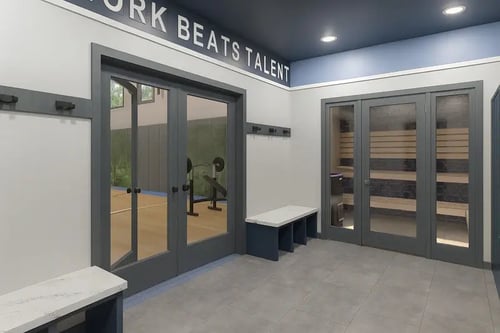
Designing a wellness suite from the start allows these elements to complement one another. A wellness suite might include:
- A dedicated workout area
- A flexible indoor sport court
- A sauna or steam room for recovery
- A cold plunge or soaking tub
- A quiet lounge area for stretching or meditation
- Attached bathroom with shower
When done well, the suite feels cohesive. Not like two separate projects, but one intentional environment.
Related Content: Home Gym and Wellness Retreat Ideas to Steal
How to Decide: Start with Your Wellness Goals
Before selecting features, step back and consider the outcome.
- Are you seeking energy and performance?
- Better recovery and sleep?
- A space to manage stress more intentionally?
- A long-term investment in aging well?
Your priorities shape the direction.
Homeowners who crave structure and measurable progress often gravitate toward a gym. Those focused on decompression and restoration often prioritize spa elements. Many find their ideal solution blends both, especially when space allows.
Clarity around how you want to feel inside the space often makes the functional decisions easier.
Practical Considerations to Make the Decision
Inspiration sets the vision, but it’s also important to consider the practical elements of adding a wellness space:
- Available Space - Ceiling height, footprint, and proximity to utilities can guide what is realistic. Most wellness spaces will require an addition to the home to allow for enough space.
- Plumbing and Ventilation - Spa elements require proper water supply, drainage, humidity control, and air movement. Planning this early prevents costly revisions later.
- Sound Control - Impact noise from weights or cardio equipment needs thoughtful mitigation, especially in multi-level homes.
- Layout Strategy - Traffic flow, natural light, and transitions between active and restorative areas all affect how the space feels.
- Resale Value - Purpose-built spaces are increasingly attractive to future buyers, especially when executed with flexibility in mind.
- Daily Use - If multiple people in the home will be using the space, it will need to be designed to be flexible enough to support multiple workouts of different styles.
Your decision may be influenced by your current home’s layout as well as the available space to work with. The most successful projects balance aspiration with technical precision.
Related Content: How to Create Your Dream Space
Creating a true wellness space at home is more than having a place at home to work out. It’s about shaping how you experience your home every day.
A gym builds strength.
A spa restores it.
Together, they create balance.
And the right choice begins with how you want to live inside the space.
At Titus Contracting, we create bespoke wellness spaces that balance beauty, functionality, and total comfort. From design to construction, our team brings your vision to life with craftsmanship and care.
Schedule a Free Consultation
Titus Contracting is a full-service remodeling company offering commercial and residential construction. We have an office in Burnsville, Minnesota and work throughout the Twin Cities.