Looking to boost your home’s accessibility? For people who are aging in place or people with disabilities living in place, having a safe and functional home is key. Upgrading your home to improve accessibility will improve your home’s function and form. And it doesn’t have to be complicated.
Benefits of an Accessible Home
Everyone’s accessibility needs will be different. However, there are some key outcomes for any accessible remodel:
- Reduce the risk of falling
- Make physical spaces easier to navigate
- Improve daily function
- Provide autonomy and independent living
Making your home work for you is the goal of any accessible remodel.
Special Considerations for Aging-in-Place
If you’re modifying your home for aging in place, there may be unique considerations you’ll want to have in mind during your remodel. You’ll want to incorporate gradual changes that address future needs as well as current needs. Working with an experienced home remodeler is key to create a home solution that will work for now and later.
In a recent radio interview on Minnesota Public Radio (MPR), guest host Kelly Gordon and her guests discuss the pros and cons of aging in place, what to plan for, and the conversations we should be having when it comes to taking care of a loved one as they get older. You can listen to the discussion HERE.
Best Home Upgrades for Aging-in-Place and People with Disabilities
For ease of reading, we’ve broken out home upgrades by consideration. However, we find for most of our clients these needs often intersect. That’s why whenever we plan an accessible remodel, we look at the big picture of your whole home, your needs, and the daily function of those living in the home. We understand there’s no one-size-fits-all solution.
Mobility Upgrades
One of the most common home remodeling needs for accessibility is accounting for mobility needs. The specific upgrades needed depend on each individual, but some upgrades to explore are:
- Ramps, stairlifts, and elevators
- Widened doorways, hallways, and pathways
- No-step entries and leveled walking spaces
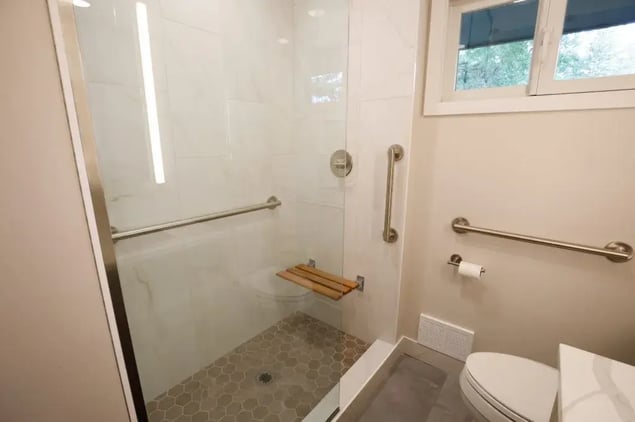
- Grab bars in key areas
- Walk-in showers and baths
- Non-slip bathroom flooring and textured shower/bath surfaces
- Built-in shower seats or stools for sitting and resting as needed
- Wheelchair accommodations (lowered sinks and surfaces)
- Raised toilets
- Pull-out shelving
- Adjustable countertops
- Main level bathrooms and bedrooms
Mobility upgrades can drastically improve the functionality of your home. When we remodel a home with mobility upgrades, our goal isn’t just to address your accessibility needs: it’s to provide a space that offers function and sparks joy.
Motor Function Upgrades
The goal with any accessible upgrade is to ensure operability. For those who have motor function needs, there are a number of home upgrades that can improve the functionality of your space:
- Automatic doors or lever-style handles
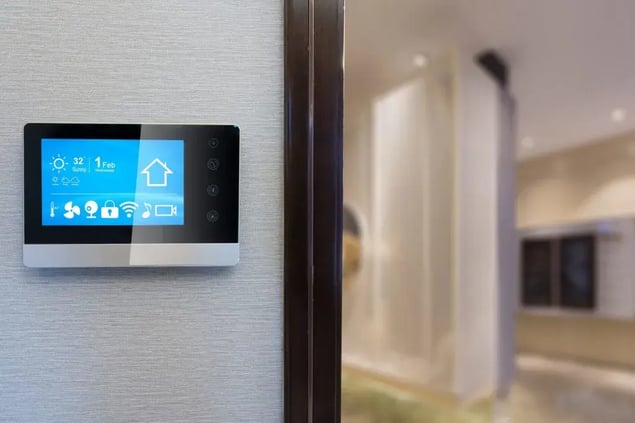
- Smart technology (can be voice-controlled, motion-activated, and/or app-controlled)
- Sensor faucets for sinks
- Toilets with built-in bidet features
- Automatic lights
- Non-slip floors
- Touch or pedal-activated faucets
- Side-opening ovens
Visibility and/or Auditory Upgrades
For homeowners who have visibility and/or auditory needs, there are a number of upgrades that can make their space work for you.
- Smart technology (can be voice-controlled, motion-activated, and/or app-controlled)
- Under-cabinet and under-surface lighting
- High-contrast design
- Tactile labeling and surfaces
- Stovetop safety tools
- Contrast strips
- Smart doorbells
- Flashing and/or vibration-alert smoke and CO detectors
- Smart appliances
Often, these upgrades can be seamlessly incorporated into the new appliances, technology, and surfaces as a part of the overall remodeling process.
Home Remodeling Services for Improved Accessibility
"My dad has MS and uses a wheelchair, so every homeowner I meet feels personal to me. I’m not just thinking about the person with mobility challenges—I’m thinking about their caretaker too, whether that’s a spouse, a family member, or a nurse’s aide. They all share the same space. That’s why I don’t just focus on function; I care deeply about how the space feels. It should feel like home—for everyone who walks through the door."
- Stephanie Morris, Designer - Titus Contracting
Numerous home upgrades are available for aging-in-place and people with disabilities that enhance accessibility and improve your home’s functionality. However, these upgrades can be a lot to take on by yourself. Using a professional to remodel your home or space is the easiest way to make these updates and do them well the first time.
Your home should be a place where you feel safe, comfortable, and supported — at every stage of life. At Titus Contracting, we specialize in aging-in-place remodeling, combining years of expertise with a genuine passion for helping you stay in the home you love. If you're ready to create a space that truly fits your needs for today and tomorrow, our caring team is here to guide you every step of the way.
Request a Quote
 Free Home Remodeling Guide:
Interior Designer, Architect, or Contractor: What's the Difference and Why it Matters
If you’re planning a home renovation, you’ll need a licensed contractor in your corner.
Someone to bring your plans to life, handle necessary permits, and ensure everything’s up to code.
But do you need an interior designer for a home remodel?
What types of building projects require an architect?
Learn more about the role of a general contractor and what you can expect.
Get the Guide
Titus Contracting is a full-service remodeling company offering commercial and residential construction. We have an office in Burnsville, Minnesota and work throughout the Twin Cities.